

Welcome to our culinary corner! Today, we are excited to share with you a delightful recipe for sun-dried tomatoes. Join us on this flavor-packed journey as we guide you through the step-by-step process of creating these tangy and savory gems right in the comfort of your own kitchen.
At our table, we believe in the magic of homemade goodness, and sun-dried tomatoes are no exception. Bursting with intense flavors and vibrant colors, these little gems can elevate any dish to new heights. Whether you’re a seasoned home cook or a budding chef, mastering the art of sun-drying tomatoes will open up a world of culinary possibilities.
Get ready to embark on this sun-kissed adventure as we unveil the secrets to making your own sun-dried tomatoes. With a little patience and a whole lot of flavor, we promise to transform these humble fruits into a true culinary treasure. So, roll up your sleeves, and let’s dive into the wonderful world of sun-dried tomatoes together!
Flavor, Harvest Time, and Best Varieties for Sun-Drying
Tomatoes, with their vibrant colors and juicy flesh, are a true delight in the world of culinary creations. These versatile fruits come in a range of varieties, each offering its unique flavor profile and culinary possibilities. From the sweet and tangy notes of cherry tomatoes to the rich and robust taste of heirloom varieties, tomatoes add a burst of freshness to any dish.
When it comes to the flavor profile of tomatoes, it’s a delightful balance between sweetness and acidity. The taste can vary depending on the variety and ripeness, ranging from bright and zesty to mellow and earthy. This versatility makes tomatoes a staple ingredient in countless recipes, from fresh salads and salsas to hearty pasta sauces and comforting soups.
Tomatoes thrive in warm and sunny climates, making them a great staple to grow in your spring and summer garden. With proper care and attention, you can enjoy a bountiful harvest and have an abundant supply of tomatoes for various culinary endeavors. Whether you have a small backyard or access to a community garden, tomatoes are a rewarding crop that can provide you with an abundance of fresh produce.
When it comes to sun-drying tomatoes, certain varieties work exceptionally well. Plum or Roma tomatoes, known for their meaty texture and low moisture content, are ideal for sun-drying. Their elongated shape and concentrated flavor make them perfect for preserving through the drying process. Cherry tomatoes, with their smaller size and intense sweetness, are also a popular choice for sun-drying.
The best time to harvest tomatoes for sun-drying is when they are fully ripe and at their peak flavor. Look for tomatoes that have a vibrant color and are firm to the touch. Slice the tomatoes into thin, uniform pieces to ensure even drying. By removing the moisture through the sun-drying process, the concentrated tomato flavor becomes a delightful culinary powerhouse.
Growing tomatoes in your garden and sun-drying them is a wonderful way to preserve their flavors for long-term storage. As you harvest your tomatoes during the peak of the season, you can transform them into sun-dried tomatoes that will bring a burst of intense tomato goodness to your dishes throughout the year. The process of sun-drying allows you to savor the taste of summer even when the colder months set in.

Different Methods to “Sun” Dry Tomatoes
Preserving tomatoes through sun-drying is a wonderful way to capture their intense flavors and create a versatile ingredient that can be used in various culinary creations. While the traditional method involves using the power of the sun to dry the tomatoes, a conventional dehydrator can also be used as a reliable alternative. Let’s explore these two methods for drying tomatoes:
Sun Drying:
Sun drying tomatoes is a time-honored method that harnesses the natural heat and energy of the sun to remove moisture from the fruit. Here’s a step-by-step guide on how to sun dry tomatoes:
Select fully ripe tomatoes: Choose tomatoes that are at their peak ripeness. Look for vibrant-colored, firm tomatoes for the best results.
Once you’ve prepared the tomatoes these are the steps you’d need to follow in order to sun-dry:
Arrange on a drying rack: Place the tomato slices on a clean drying rack or a screen. Make sure to leave some space between the slices for proper airflow.
Protect from pests: Cover the tomato slices with cheesecloth or a fine mesh to protect them from insects and dust while allowing air circulation.
Place in a sunny location: Find a sunny spot with good air circulation, such as a sunny windowsill, outdoor table, or a clean, dry surface. Ensure that the location is protected from rain and excessive humidity.
Rotate and monitor: Throughout the drying process, regularly rotate the tomato slices to ensure even drying. Monitor the progress and remove any slices that show signs of spoilage.
Drying time: Sun drying can take anywhere from several days to a week or more, depending on the weather conditions and the thickness of the tomato slices. The tomatoes are ready when they become leathery with no signs of moisture.
Store properly: Once fully dried, allow the tomatoes to cool completely. Store them in an airtight container or glass jar with a tight-fitting lid. Keep the container in a cool, dark place to maintain the quality and flavor of the sun-dried tomatoes.
Conventional Dehydrator:
If you prefer a more controlled and faster drying process, a conventional food dehydrator is a reliable option. Here’s how to use a dehydrator to dry tomatoes:
Arrange on dehydrator trays: Place the tomato slices in a single layer on the dehydrator trays, ensuring proper spacing between the slices for adequate airflow.
Set the temperature: Consult your dehydrator’s manual for specific instructions, but generally, setting the temperature between 135°F (57°C) and 145°F (63°C) is suitable for drying tomatoes.
Drying time: The drying time can vary depending on the thickness of the slices and the dehydrator model. Generally, it takes around 6 to 12 hours to fully dry the tomatoes in a dehydrator.
Rotate and monitor: Rotate the trays periodically to promote even drying. Check the slices regularly, especially towards the end of the drying process, to prevent over-drying or burning.
Both sun drying and using a conventional dehydrator offer excellent results for preserving tomatoes. The choice between the two methods depends on factors such as weather conditions, time availability, and personal preference. Whichever method you choose, the end result will be delicious, flavor-packed sun-dried tomatoes that can be used in a wide range of dishes, from salads and pasta to pizzas and spreads.
Experiment with different tomato varieties, such as Roma, San Marzano, or cherry tomatoes, to explore unique flavor profiles and textures in your sun-dried tomatoes.

Preparing Tomatoes for Drying: Step-by-Step Guide
At our recipe blog, we have perfected the art of drying tomatoes, whether through sun drying or using a conventional dehydrator. The key to achieving delicious and flavorful dried tomatoes lies in the careful preparation of the fruit before the drying process. Here’s our step-by-step guide on how to prepare tomatoes for drying:
Step 1: Selecting the Tomatoes
Choose ripe, flavorful tomatoes for the best results. Varieties like Roma, San Marzano, or cherry tomatoes work exceptionally well due to their rich flavor and meaty texture. Look for tomatoes that are firm, blemish-free, and fully ripened. Ideally, harvest or purchase tomatoes at the peak of their freshness for optimal flavor.
Step 2: Washing the Tomatoes
Before beginning the preparation process, thoroughly wash the tomatoes under cool running water. Gently rub the surface of each tomato to remove any dirt, debris, or pesticide residue. Pat them dry using a clean kitchen towel or paper towel.
Step 3: Slicing the Tomatoes
Next, it’s time to slice the tomatoes. The thickness of the slices will depend on your personal preference and the drying method you choose. For sun drying, aim for slices that are about 1/4 to 1/2 inch thick. If using a dehydrator, thinner slices (around 1/8 inch) will help speed up the drying process.
Step 4: Seasoning the Tomatoes
We love to enhance the natural flavors of our sun-dried tomatoes with our own special blend of Mediterranean spices. Ingredients for our Mediterranean Spice Blend:
sea salt
garlic powder
onion powder
dried parsley
ground black pepper
mustard seeds
sunflower oil
dried lovage root
ground allspice
dried rosemary
ground nutmeg
ground curcumin (turmeric)
Take each tomato slice and lightly sprinkle both sides with a pinch of the Mediterranean spice blend. Ensure that each slice is evenly coated with the seasoning. The combination of sea salt, garlic, onion, parsley, pepper, mustard seed, sunflower oil, lovage root, allspice, rosemary, nutmeg, and curcumin will infuse the tomatoes with a delightful burst of Mediterranean flavors.
Step 5: Allowing the Tomatoes to Rest
After seasoning, let the tomato slices rest for about 15-20 minutes. This allows the spices to permeate the slices and enhances the overall flavor profile. During this time, the tomatoes will slightly release their natural juices, which will further intensify the flavors during the drying process.
Step 6: Preparing for Drying
If you’re sun drying the tomatoes, gently place the seasoned tomato slices on a clean, flat surface that receives ample sunlight. Ensure that the slices are arranged in a single layer and have enough space between them for adequate airflow.
For those using a dehydrator, place the seasoned tomato slices on the dehydrator trays, making sure they are evenly spaced to allow for proper airflow during the drying process. Follow your dehydrator’s instructions for tray placement and settings.
Step 7: Drying the Tomatoes
For sun drying, carefully position the tomatoes in a sunny location with good airflow. Protect them from insects and dust by covering them with cheesecloth or a fine mesh. The drying time can vary depending on weather conditions, but it usually takes several days to a week or more. Rotate the slices occasionally to ensure even drying.
When using a dehydrator, set the temperature according to the manufacturer’s instructions and turn it on. The drying time typically ranges from 6 to 12 hours, depending on the thickness of the slices and the dehydrator model. Rotate the trays periodically for even drying.
Step 8: Checking for Dryness
Throughout the drying process, check the tomatoes regularly to monitor their progress. They should be completely dry with a leathery texture and no signs of moisture. Be mindful not to over-dry them, as they can become brittle and lose their flavor.

Storing the Dried Tomatoes
Once your tomatoes are dried to perfection, it’s time to store them for long-term enjoyment. There are a few methods you can choose from, depending on your preferences and storage options:
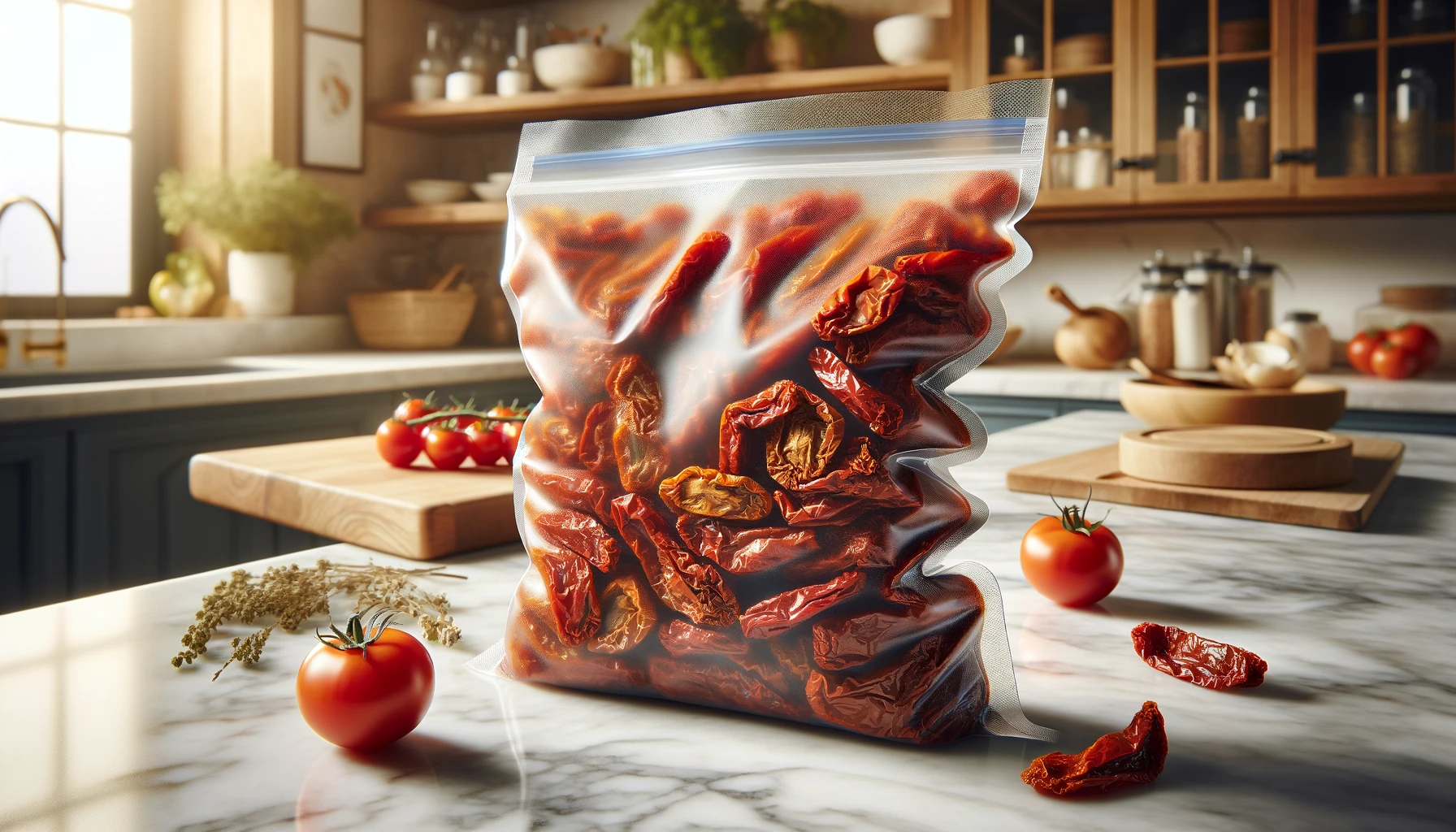
Airtight Containers: Transfer the completely cooled dried tomatoes into airtight containers, such as glass jars or food-grade plastic bags. Make sure to remove as much air as possible from the containers to minimize the risk of moisture exposure. Properly stored dried tomatoes can retain their quality for several months, providing you with a flavorful ingredient whenever you need it.
Freezing: Another excellent method for long-term storage is freezing your sun-dried tomatoes. Place the dried tomato slices in a single layer on a baking sheet and freeze them for a few hours until firm. Then, transfer the frozen slices into resealable freezer bags or airtight containers. Freezing helps maintain the tomatoes’ flavor and texture, and they can be stored in the freezer for up to a year. When you’re ready to use them, simply thaw the desired amount in the refrigerator and pat them dry before incorporating them into your recipes.
Oil Packing: A popular preservation method is packing the dried tomatoes in oil, which not only extends their shelf life but also adds a rich, infused flavor. Start by placing the dried tomato slices in sterilized jars, alternating layers of tomatoes with layers of aromatic ingredients like garlic, fresh herbs (such as basil, oregano, or thyme), and a sprinkle of salt and pepper. Fill the jar with good quality oil, such as olive oil, ensuring that the tomatoes are fully submerged. Seal the jars tightly and store them in the refrigerator. The oil-packed sun-dried tomatoes can last for several months, and the infused oil can also be used in dressings or as a flavorful cooking oil.
Whether you choose airtight containers, freezing, or oil packing, the key to successful long-term storage is to keep your sun-dried tomatoes in a cool, dark place away from heat and moisture. Regularly check for any signs of spoilage, such as mold or off odors, and discard any tomatoes that show such signs.
By following these steps and using our special blend of Mediterranean spices, you’ll create flavorful and versatile dried tomatoes that can be used in a variety of dishes. From salads and sandwiches to pasta and pizzas, these sun-dried or dehydrated tomatoes will add a burst of savory sweetness and a touch of the Mediterranean to your culinary creations. So, gather your ripe tomatoes and embark on the journey of creating your own delicious dried tomatoes—it’s a preservation technique that will bring joy to your taste buds throughout the year!